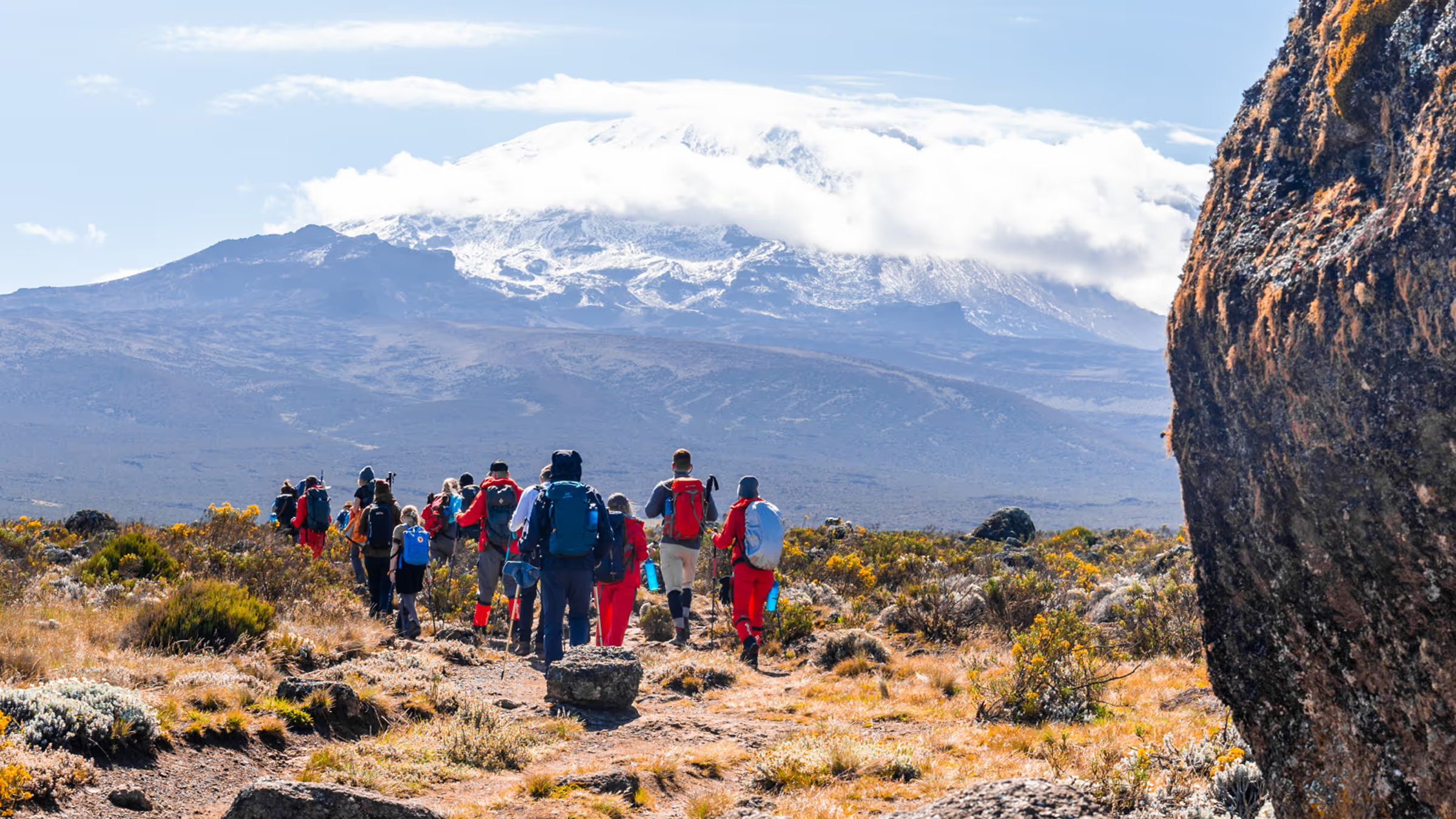
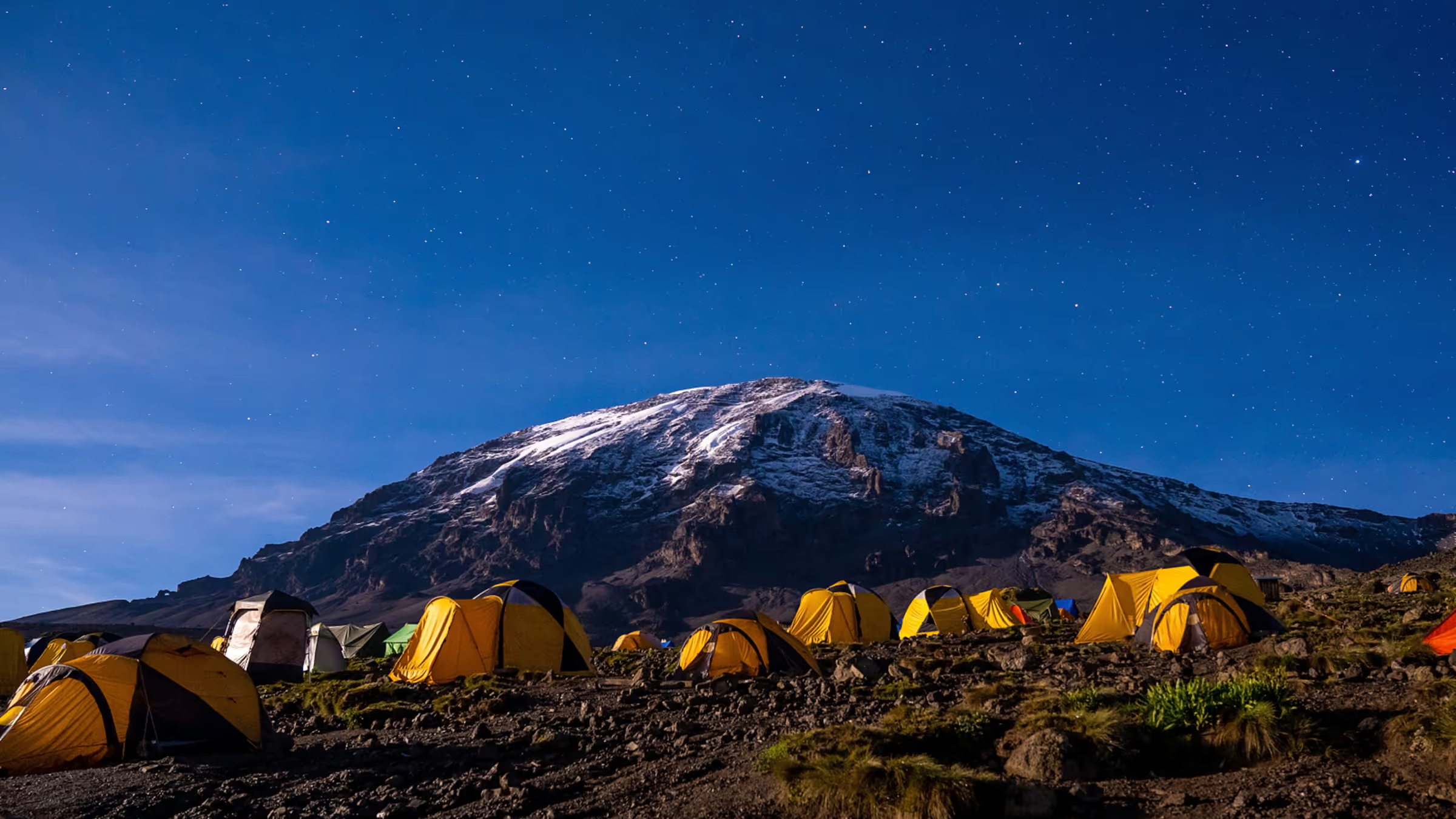
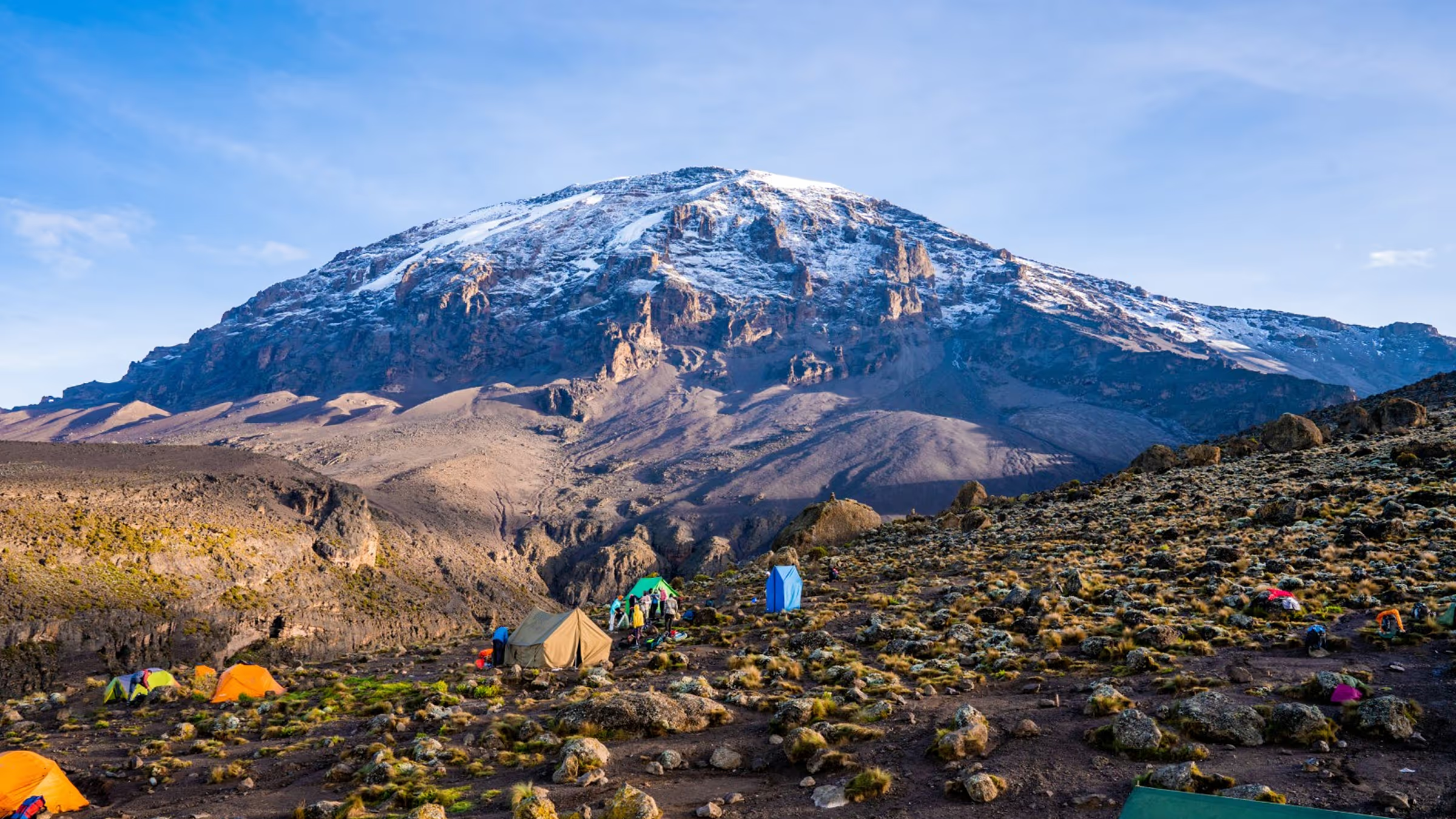
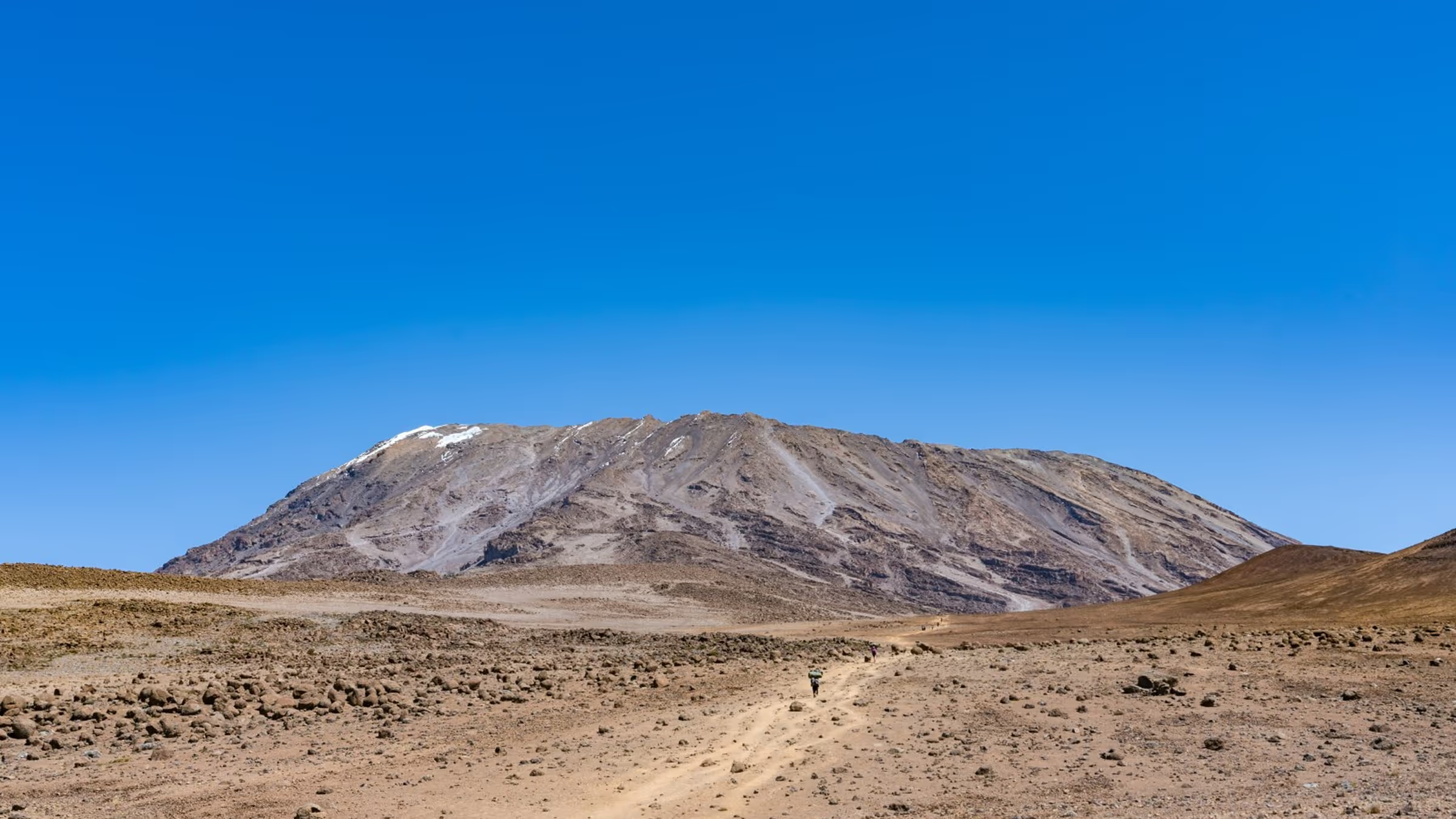
In the country of the highest single standing mountain in the world, mountain climbers’ hearts beat faster. With breathtaking scenery, rugged mountains, diverse vegetation in front of unique cultural backdrops Tanzania fascinates visitors young and old alike. Our various trekking routes offer hiking fun for everyone, for every level of fitness and experience.

While its size may be intimidating, with training and the all important acclimatisation, this impressive mountain really can be taken on by people of all backgrounds and different fitness levels thanks to the variety of routes that are offered by Viva Africa Tours.
to summit
metres high
route distances
Success rate
difficulty
mountain type
Distinguishing features
Tallest mountain in Africa and the fourth highest in the world
Wildlife
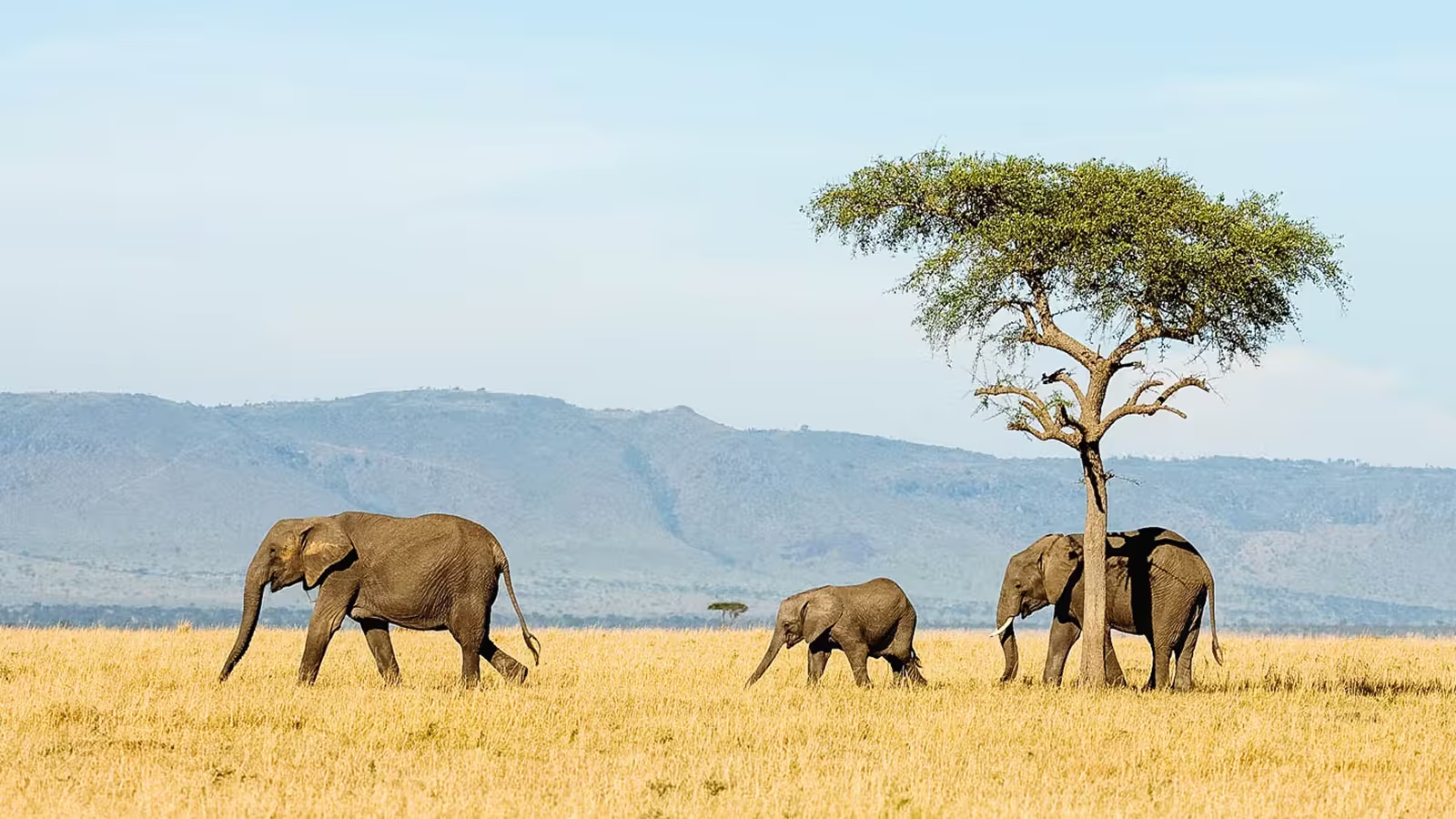
400 bird species, buffalos, giraffes, several monkey species e.g. baboons and colobus monkeys
Terrain
Kilimanjaro’s topography is incredibly varied, and our treks will take you through various habitats. As we climb higher, the lower slopes of banana plantations and dense rainforest give way to heath and moorland before reaching the granite moonscapes of Kibo Peak.
Comparison to Mount Meru
Much less technical, but with a higher altitude
Good to know
You may choose between two hiking alternatives to tackle Meru at a faster or somewhat slower pace.
Knowledgable and professional guides are extremely important, they know the weather conditions and what is and isn't possible when summiting. They can also give you sound advice to help you get up the mountain.
Being physically fit is important and is a key factor in summiting Kilimanjaro. Adequate preparation is important, but you do not need to be a super athlete to get to the top.
The dry season is a much better time to climb the mountain, the wet season can make certain routes much more challenging.
Longer routes generally give more time to acclimatise to altitude, whereas shorter ones may be harder to climb as the elevation gain is much higher in a shorter period of time
from
$1500 USD
This is a scenic 8 to 9 day trek known as the “Whiskey Route,” offering diverse landscapes and a high summit success rate.
Summit success
Scenic
Challenging
8 - 9 days
Tours for this route:
from
$1910 USD
The Lemosho Route on Mount Kilimanjaro is a longer, less crowded trek offering stunning scenery, great acclimatization, and one of the highest summit success rates.
Scenic
Remote
Successful
9 - 10 days
Tours for this route:
from
$2615 USD
This is the longest and most scenic trek, circling the mountain allows for excellent acclimatisation and a high summit success.
Scenic
Remote
Summit success
11 days
Tours for this route:
from
$1365 USD
Known as the “Coca-Cola Route,” is the easiest and only path with hut accommodations, but has lower summit success rates.
Popular
Comfortable
Challenging
7 - 8 days
Tours for this route:
from
$1500 USD
This route is the shortest, steepest and most physically demanding of all. It is well known for its challenging nature and is perfect for expert hikers.
Steep
Remote
Challenging
8 days
Tours for this route:
from
$2615 USD
This short, steep, and adventurous path offers dramatic scenery and a thrilling summit approach.
Steep
Adventure
Scenic
11 days
Tours for this route:
from
$1500 USD
The Rongai Route on Mount Kilimanjaro approaches from the north, offering a quieter, gradual climb with a high chance of summit success.
Quiet
Gradual
Reliable
8 - 9 days
Tours for this route:
We offer a package for those that want to experience the best of both worlds
We adhere to data privacy best practice so we don’t share the details of your fellow travellers unless they have expressly agreed to it. But we do ask our guests if they are happy with sharing contact details, and if they are, then we share. Half the fun of a trip is making new friends!
Yes, we can store all your items that you won't need on your trek or safari for you, and hand them back safe and sound when you return to Moshi. We’d appreciate that you don’t bring your grand piano with you, though.
We recommend a mix of money: credit card and cash in US Dollars. Moshi has plenty of banks, where you can withdraw money with your Visa (preferred) or MasterCard. Since there is a daily withdrawal limit of 1,000,000 Tanzanian shilling (roughly 570 USD) you should carry some US dollars in cash with you. This is especially handy when it comes to paying the remaining 70 % of your tour price. At our Viva Africa Tours' office we accept cash only.
For security, keep your cash in different places – in your luggage, and on your body. Keep a backup credit card separate from your main one and keep online cash safe in two different accounts. Always keep your important stuff like passport and credit cards in a money pouch close to your body and/or under your clothes. If you’ve a spare wallet or purse that you don’t mind losing, stick a few low-value notes in and a fake credit card.
Yes, internet access is possible. Moshi has a few internet cafés as well as restaurants/bars with wifi access. Most of the hotels offer free wifi. The speed of the internet differs from place to place. Please keep in mind that our infrastructure might not be as up to speed as in your country.
We love Tanzania but we have to admit our telecommunication coverage isn’t all that great and it’s a nice surprise if our own mobiles work everywhere. Your best bet is to contact your phone provider before you travel to check for global roaming and prices. Alternatively, you can easily purchase a local sim card in Moshi, but make sure that your phone is unlocked or it won’t work.
Tanzania has two type of plugs Type G (British) and Type D (Old British). Type G is the more common plug, but there are still places that use Type G. We recommend to bring an adapter that covers both plugs.
We’ve prepared a complete packing list, which will give you an overview of what travel documents you’ll need to carry with you. We recommend you make copies of your documents (you can also take pictures with your smartphone and store them in the cloud online so that you can access them anywhere). Don’t forget to carry two extra passport photos with you and the contact details of your embassy.
Tanzania's currency is the Tanzanian shilling (TZS). It’s called the shilingi in Swahili One US Dollar is worth 2,483 TZS (November 2025).
Sorry, we can’t help you with the visa application process but you can apply easily through the Tanzanian embassy in your home country.
It’s best to check your visa requirements with Tanzania's embassy in your home country, or with your foreign office department. Visa rules differ depending on where you’re from. The Tanzanian embassy website will always have the latest information about requirements and costs, and you’ll be able to download the correct forms.
All our treks and packaged trips that aren’t safaris include airport transfers to and from the airport. For our safaris, which start and end in Moshi, you’ll need to book the airport transfers for 40 USD per one way. Please provide us with your flight details (arrival time + flight number) via info@vivaafricatours.com.
At least two months before your trip please visit your doctor or specialist travel health professional to ensure that your vaccinations are up to date. These vaccines should include measles-mumps-rubella (MMR) vaccine, diphtheria-tetanus-pertussis (Tdap) vaccine and polio vaccine. Vaccinations against hepatitis A + B, typhoid and rabies are also recommended. If you’re travelling to Zanzibar you’ll need to have a yellow fever vaccination. Tanzania in general does not require a yellow fever vaccination, but if you have a connecting flight within Africa, you’ll need a yellow fever certificate to enter Tanzania. Also consider malaria prophylaxis. If you need emergency medical assistance during your trip, dial 112 and ask for an ambulance. You should contact your insurance/medical assistance company promptly if you are referred to a medical facility for treatment.
Cleanliness is very important when handling all food. Wash your hands as often as possible with soap, especially before meals. Where sanitation facilities are limited or rudimentary, alcohol hand cleaning gel can be very effective. Bring a few travel-sized bottles from home. They’re very easy to carry anywhere. Although Tanzanian street food looks and smells tasty, avoid it if you have a sensitive stomach. Eat it only if it’s been cooked piping hot in front of you and served on clean plates. Food that has been recently prepared, cooked and served piping hot is generally safe to eat, as is fruit (e.g. bananas and oranges) that you can peel yourself. Dairy products that have been pasteurised such as yoghurt, cheese and milk are generally safe (and tasty!) to eat.Avoid:
Only buy water in bottles that are served in factory-produced cans or bottles with intact seals. Carbonated drinks, fruit drinks and pasteurised drinks in this condition are generally safe to drink. Don’t drink anything where you suspect the seal has been tampered with. Tea and coffee made with boiling water and served piping hot are also generally safe to drink. If you don’t have bottled water, you can kill bacteria and other nasties by bringing the water to a rolling boil. Don’t drink the tap water or clean your teeth with it.
Kilimanjaro is considered by many to be the easiest high mountain to climb. However, the altitude of 5,895 meters (19,340 feet) is still extremely high and it’s essential that you prepare properly to get the best out of your hike, to feel well and healthy every day and to avoid mountain sickness. It’s best if you train for at least two months before your trip – hiking and hill walking at home to strengthen your muscles and test out your kit, and some cardiovascular exercise to strengthen your heart.
Also, it is absolutely essential that you research and understand the causes and symptoms of altitude sickness before beginning your adventures.
Each of our guides has several years of experience on Kilimanjaro. They each need to be licensed by the park authorities, too. Our most experienced guide has climbed Kilimanjaro more than 200 times (18 years’ experience) while our most junior guide has climbed about 50 times (5 years’ experience). Be sure to listen to your guide’s advice while on the mountain and remember to go slowly.
Yes, our guides carry well-stocked first-aid kits with equipment for cuts, scrapes and blisters: they also carry common over-the-counter medicines, and some emergency supplies. They don’t carry prescription medicines so please bring your own supply.
A tip isn’t included in your tour price. It can be difficult to know the right level of gratuity in a country other than your own so we’ve put together some guidelines:
Energy snacks and drinks aren’t common in Tanzania so you should bring a supply with you. Gel energy snacks are extremely useful for summit day.
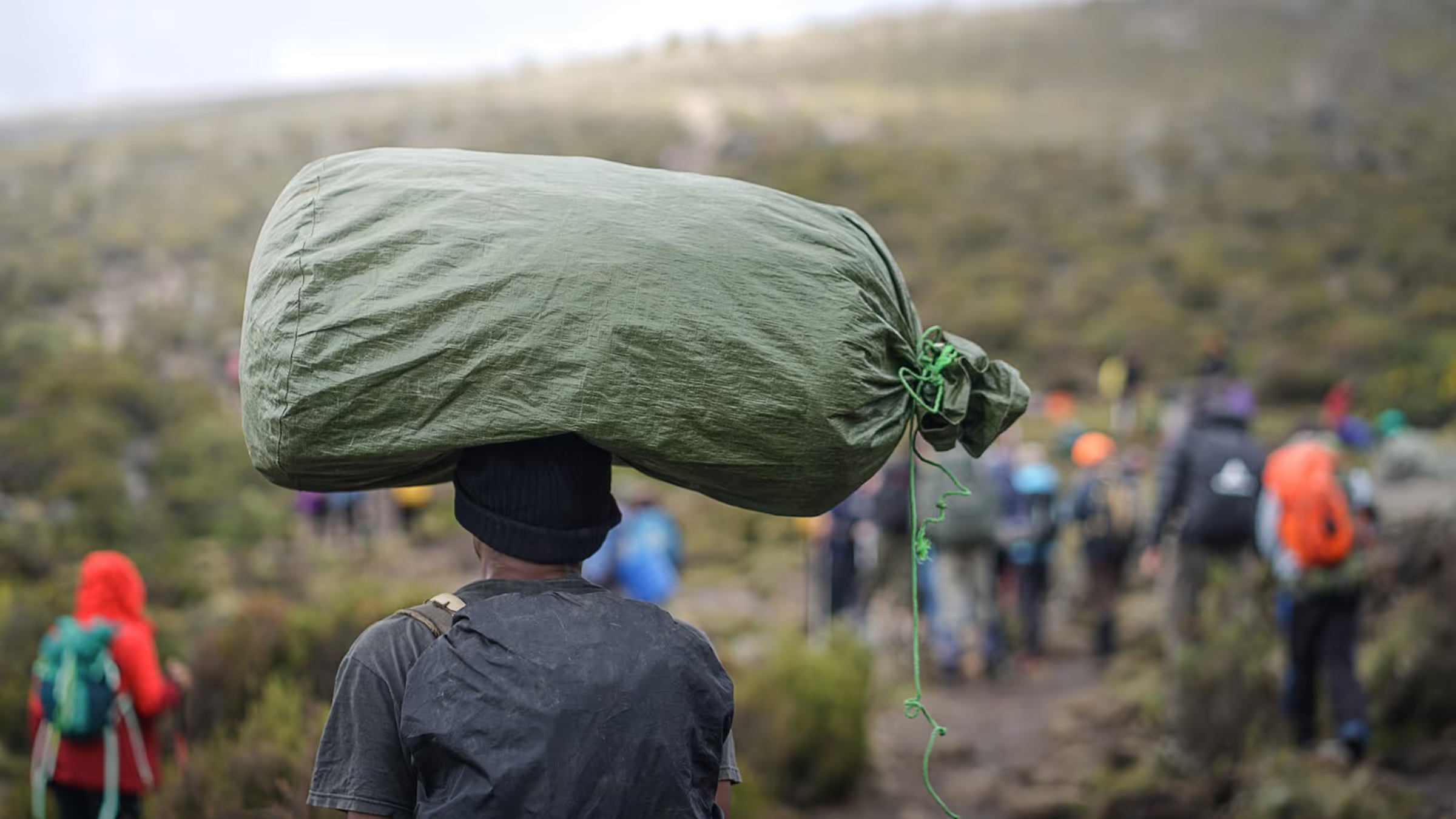
We love our porters. Theyare very special people. They are tough and hardy, and you will be amazed at their resilience. They’ll carry most of your luggage, as well as tents and other camping equipment, cooking gear, rucksacks and picnic tables. Our porters won’t ascend the summit stretch with you; this is the guides’ and assistant guides’ job. All you’ll need to carry is a day pack with your drinking water, rain gear, camera and lunch.
We will provide you with most things you’ll need on your hike as we rent or own much of the equipment, but there are some things you’ll need to provide yourself with. Take a look at the packing list and make sure that you bring everything you need. Alternatively, we can recommend places in Moshi from which you can hire anything you can’t bring from home.
We’ve provided a full packing list, which explains what you need to bring on your climb.
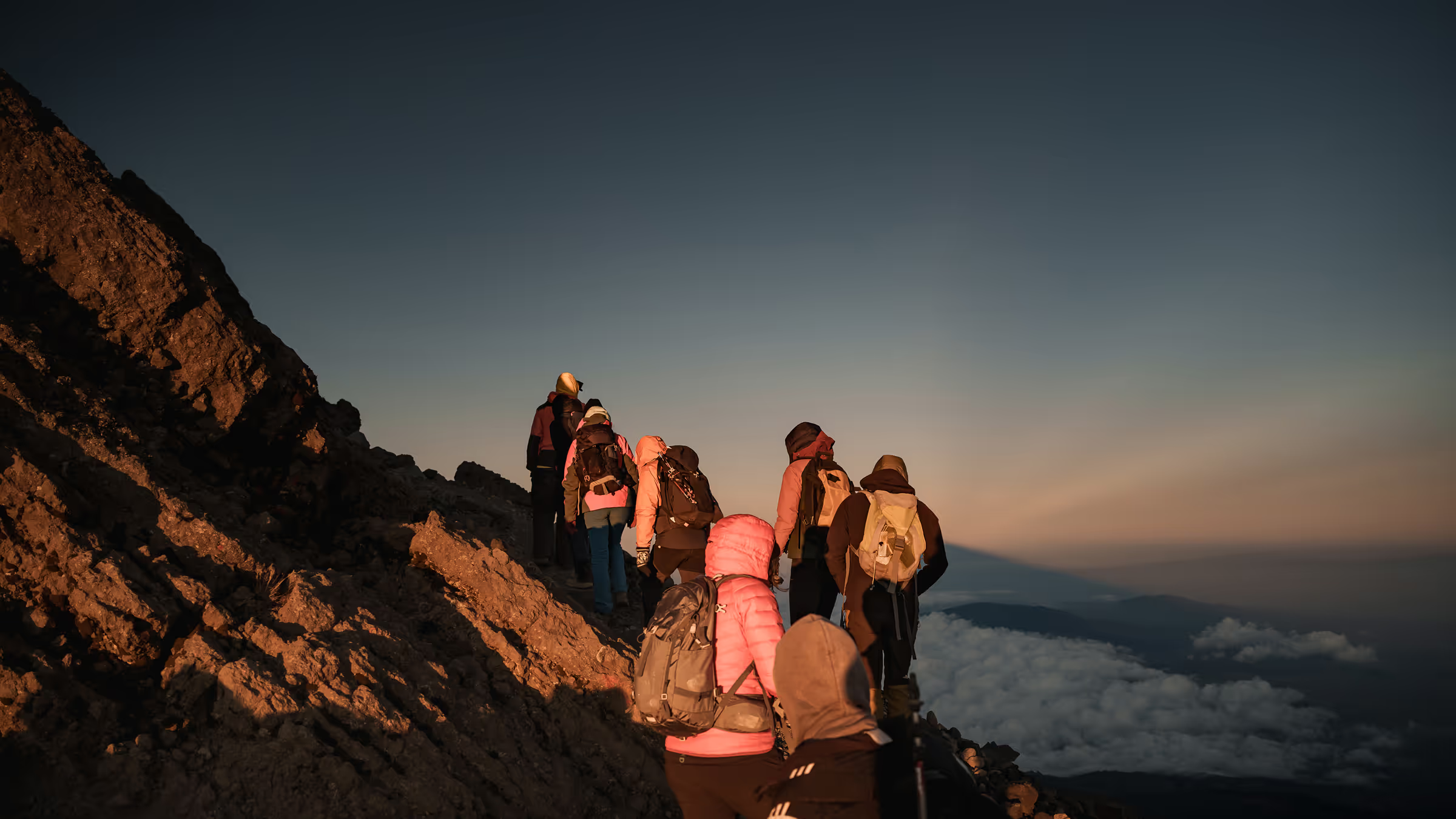
Kilimanjaro's final ascent to Uhuru Peak is made at night because of the weather patterns on Kilimanjaro. The midnight trek to the summit is designed to ensure your safety as if you summit during the day, you run the risk of being caught in snow, hail or rainstorms. You’ll also get the most amazing views from the summit with the sun rising in the pink and apricot skies of dawn, and you’ll be well on your way down before the clouds roll in at 10 a.m. sharp.
On most days, you’ll hike about 10 km (6.2 miles) and this will be at a slow pace so that you can adjust to the elevation. We don’t do route marches!
You’ll always be accompanied by a team of guides and assistant guides. If someone becomes ill, they’ll be escorted safely down the mountain by an assistant guide. You won’t be left on the mountain without a guide!
The climb up Kilimanjaro should always be taken seriously because of the risk of altitude sickness in all its forms: Acute Mountain Sickness (AMS) with it’s more serious variants of High Altitude Cerebral Edema (HACE) and High Altitude Pulmonary Edema (HAPE). Because there is less oxygen in the air at altitudes over 8000 feet, your body can’t take in as much oxygen as it needs, which can result in AMS. The symptoms of mild AMS can vary between individuals, with symptoms that include:
Symptoms are usually worse at night. Although the symptoms are easily treatable with rest and hydration, ibuprofen or paracetamol for a headache and promethazine for nausea, the best way to prevent AMS is to acclimatise slowly. HACE is the swelling of the brain caused by a lack of oxygen, and can develop over a very few hours. Symptoms include:
HAPE is a build up of fluid in the lungs. Symptoms of HAPE include:
The symptoms of HAPE can start to appear a few days after arrival at high altitude. Both HAPE and HACE can be fatal if not treated immediately.

You can climb Kilimanjaro all year round if you have the right equipment but August to October is the climbing season as it tends to be drier during these months. The disadvantage of this time is that it’s Kilimanjaro’s rush hour. If you want peace and quiet, climb in June.
There are seven established routes up to the summit of Kilimanjaro; each route is unique and an experience in itself. Each route also has advantages and disadvantages and you’re going to have to ask yourself:
Acclimatisation to avoid altitude sickness is very important if you want to successfully conquer Mt Kilimanjaro instead of being carted down on a stretcher. Choosing a quicker (and cheaper) route is a false economy. The seven routes are: